When emotions feel intense, it can be difficult to know how to respond. You might find yourself reacting in ways you later regret, feeling overwhelmed by everyday situations, or struggling to communicate what you need in relationships. These experiences can be exhausting, but they do not mean you are failing.
Dialectical Behaviour Therapy (DBT) offers practical skills for navigating these challenges. It helps people understand their emotions, manage distress, and approach relationships with greater confidence. These skills can be relevant to people with a wide range of concerns, not just one particular diagnosis.
So, what is DBT, and how do you know whether it might be for you? Here we explain its approach, the four core skills modules, and what to consider when exploring a group.
What is DBT?
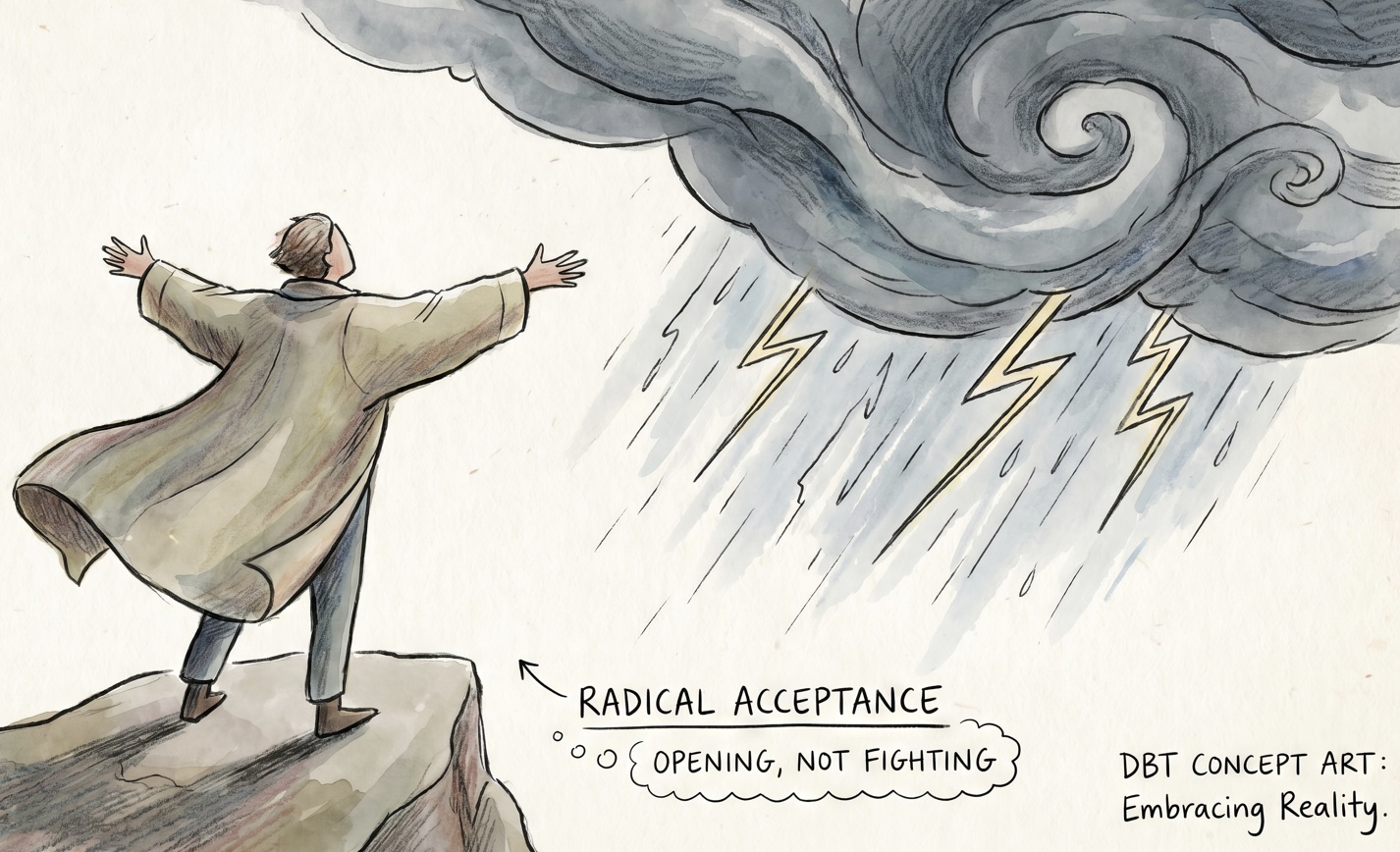
DBT is a structured psychological therapy that brings together two important ideas: acceptance and change. This means acknowledging your feelings and experiences without judgement, while also learning new ways of responding when your current patterns are causing difficulties.
Acceptance does not mean giving up or approving of something harmful. It means recognising what is happening right now so you can make a more helpful choice about what comes next.
For example, you might recognise that feeling hurt after an argument is understandable, while also learning how to express that hurt without withdrawing or escalating the conflict.
DBT beyond diagnosis: what does transdiagnostic mean?
DBT is often associated with borderline personality disorder, for which it was originally developed. However, its use has expanded beyond this diagnosis. In particular, DBT skills training can be used in a transdiagnostic way.
This simply means working with difficulties that can occur across different diagnoses, rather than focusing on one diagnosis alone. For DBT skills training, these include intense emotions, difficulty coping with distress, impulsive reactions, and relationship challenges.
For example, someone living with anxiety and someone experiencing depression may both want to learn how to respond to overwhelming feelings more effectively. DBT skills may be relevant to these shared difficulties, even though their experiences are different. The question is not only “What diagnosis do I have?” but also “What would I like help managing?”
What happens in a DBT skills group?
A DBT skills group is more structured than a general support group. Rather than focusing mainly on talking through personal experiences, sessions centre on learning and practising skills that can be used in everyday life.
Groups are led by psychologists and include teaching, discussion, practical exercises, and opportunities to review how you have used skills between sessions. Practising outside the group helps you apply what you learn to everyday life.
At Sydney Psych Hub, we offer an open DBT group and welcome most people who are interested in developing these skills. Our group is not restricted to one diagnosis. People can come with different experiences and concerns while working on skills that are useful across those differences.
The four modules of DBT
1. Mindfulness: noticing what is happening in the present
Mindfulness is the foundation of DBT. It involves learning to pay attention to the present moment, including your thoughts, emotions, physical sensations, and surroundings, without immediately judging or reacting to them.
This is not about clearing your mind or feeling calm all the time. It is about noticing what is happening so you have more choice in how you respond.
For example, during a difficult conversation, you might notice tension in your shoulders, a thought that you are being criticised, and an urge to interrupt. Mindfulness helps you recognise those experiences and bring your attention back to what is actually being said.
Over time, this practice can help you pause rather than respond automatically.
2. Distress tolerance: getting through difficult moments
Some situations cannot be solved immediately, and painful emotions do not always disappear when we want them to. Distress tolerance focuses on getting through these moments without making the situation worse.
Skills may include self-soothing, temporarily redirecting your attention, and accepting the reality of a situation that cannot be changed right now. Acceptance is not the same as agreeing with what happened or deciding that it is acceptable.
For example, if you receive an upsetting message, you might use a soothing activity and pause before replying, rather than sending a response while feeling overwhelmed. Once the intensity has eased, you may be better placed to decide what to do.
The aim is not to avoid every uncomfortable feeling. It is to respond to distress in ways that protect your wellbeing.
3. Emotion regulation: understanding and responding to emotions
Emotion regulation helps you understand what you are feeling, what may be contributing to it, and how to respond effectively. It also involves learning ways to reduce your vulnerability to intense emotions.
This module may explore naming emotions, checking whether your interpretation fits the facts, and looking after everyday needs such as sleep and regular meals. It can also involve choosing a different action when an emotional urge does not fit the situation or would make things worse.
For example, if a friend has not replied to a message, you might initially feel rejected. Rather than assuming they are upset with you, you can consider other explanations, such as them being busy, before deciding how to respond.
Emotion regulation is not about suppressing feelings. It is about understanding them and finding responses that support your longer-term goals.
4. Interpersonal effectiveness: communicating needs and maintaining boundaries
Relationships can become difficult when we struggle to ask for what we need, say no, or manage disagreements. Interpersonal effectiveness focuses on communicating clearly while considering your goals, your relationships, and your self-respect.
This module teaches skills for making requests, setting boundaries, and responding to conflict. It also recognises that keeping someone else happy should not always come at the expense of your own needs.
For example, you might practise declining an extra commitment respectfully, or explaining to a partner what support you need rather than hoping they will guess.
The aim is not to control another person’s response. It is to communicate in a way that is clear, respectful, and consistent with your values.
Is DBT for me?
DBT skills training may be worth exploring if you often feel overwhelmed by emotions, find it difficult to get through stressful moments, or react in ways you later regret. It may also be relevant if you struggle to express your needs, set boundaries, or manage recurring relationship difficulties.
It may be a good fit if you are looking for practical tools and are willing to practise them between sessions. You do not need to identify with a particular diagnostic label to enquire about our open group. What matters is whether the skills relate to the difficulties you want support with.
Welcoming most people does not mean that a group is the right fit for everyone. Our team can discuss your needs and help you consider whether the group, individual therapy, or a combination would offer appropriate support.
Learning new skills takes time. You do not need to get everything right straight away, and needing practice does not mean you are doing it wrong. The aim is to gradually develop more helpful ways of responding to yourself and the situations you face.
Want to join our group?
At Sydney Psych Hub, our open DBT group welcomes people with a broad range of experiences and concerns. If you are wondering “Is DBT for me?”, contact our team to discuss what you would like help with and whether the group may be a suitable next step. You can complete the enquiry form here DBT Group Intake Form | Sydney Psych Hub
This article provides general information and is not a substitute for individual assessment or treatment advice.